Binary options in 2026 and where to start when you have never placed a trade before
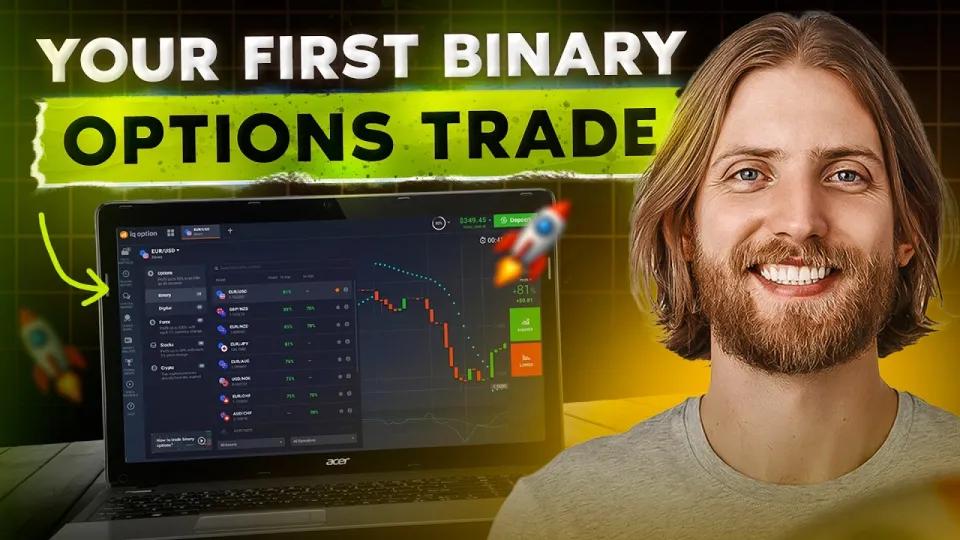
Video: Binary Options | Binary Options Tutorial for Beginners | Where Should You Start?
· based on the channel Binary options tutorial for beginners
Binary options are fixed-time contracts where you choose a direction, a strike price and an expiry, and the trade either pays a set percentage or expires worthless. For a beginner, the practical starting point is not a strategy but three decisions: pick a regulated-as-possible platform, trade a demo account for at least a few dozen trades, and cap each position at 1–2% of your balance. A walkthrough of the basics is available on Quotex, where you can open a demo account and see the payout percentages before risking money.
What a binary option actually is and how it settles
A binary option is a yes-or-no bet on whether an asset will be above or below a given price at a fixed moment. You do not own the underlying asset, you do not set a stop loss, and the maximum you can lose is the stake you committed. That simplicity is the appeal and also the trap: there is no partial exit, so the outcome is entirely binary at expiry.
The mechanics break down into four parts:
- Asset — usually forex pairs, gold, stock indices or crypto, offered around the clock on most retail platforms.
- Expiry — from 30 seconds on some brokers up to a day or a week; short expiries behave almost like coin flips because spread and noise dominate.
- Payout — the percentage credited on a win, commonly 60–92% depending on asset and expiry length.
- Stake — the amount deducted if the contract finishes out of the money.
The payout number matters more than beginners expect. At a 60% payout you need a 62.5% win rate to break even; at 80% you need 55.6%; at 90% you need 52.6%. Any strategy that wins roughly half its trades is a slow loss unless the payout is unusually high.
Binary options tutorial for beginners: the first five steps
A repeatable onboarding sequence matters more than any indicator setup. The order below is the one that keeps new accounts alive long enough to learn something.
- Register and verify on one platform only — Quotex, Pocket Option or Binarium are the three covered in the beginner walkthrough. Verification usually requires ID and proof of address before withdrawals.
- Switch to the demo account and place at least 50 trades on one asset class. The goal is to learn the order ticket, not to win.
- Pick one asset and one expiry. EUR/USD with a 5-minute expiry is a reasonable default; 30-second crypto contracts are not.
- Fix your stake at 1–2% of the balance. On a $200 demo balance that is $2–$4 per trade.
- Log every trade — time, direction, expiry, reason, result. Twenty logged trades reveal more than twenty hours of videos.
Only move to real money after the demo log shows a positive expectancy over at least 100 trades at a realistic payout. Most people will not reach that point, and finding out on demo is the cheapest possible outcome.
Payout percentages, break-even math and risk per trade
The break-even win rate is the only number that tells you whether a strategy is viable at a given payout. It is calculated as 1 divided by (1 plus the payout as a decimal). At 70% payout: 1 / 1.70 = 58.8%. At 85%: 1 / 1.85 = 54.1%. If your logged win rate sits below that threshold, the approach loses money regardless of how good the entries feel.
Position sizing is the second half of the equation. With 1% risk per trade, a run of ten losses costs about 9.6% of the balance; with 10% risk per trade, the same run costs roughly 65%. Binary options produce long losing streaks by design, so the stake size decides whether you survive the variance.
A simple rule set that works for most beginners:
- Risk no more than 1–2% of the balance per contract.
- Never increase the stake after a loss to "recover" it — martingale sizing is the fastest documented route to a zeroed account.
- Stop for the day after three consecutive losses.
- Withdraw a portion of any profit rather than compounding it all back in.
Quotex, Pocket Option and Binarium compared for new traders
The three platforms named in the tutorial differ mainly in interface, minimum deposit and asset list rather than in the underlying contract type.
- Quotex — a compact web and mobile terminal, low minimum deposit, a wide set of expiries from one minute upward, and a demo balance that resets. Its payout percentages are displayed directly on the order button.
- Pocket Option — a social-trading layer with visible trader feeds, a low entry deposit and a broad asset list including crypto and OTC pairs. The social feed is entertainment, not a signal service.
- Binarium — a more conventional layout with standard forex and commodity assets, tournaments and a demo mode aimed at newcomers.
All three are offshore brokers rather than EU- or UK-regulated firms, which is the single most important fact for anyone deciding where to register. Check the licence, the withdrawal terms and the reviews on processing times before depositing anything.
Typical beginner questions and mistakes
Most of the doubts new traders raise come down to a handful of recurring themes. The first is payout versus probability: a 90% payout on an exotic pair with a wide spread is often worse than a 70% payout on EUR/USD. The second is expiry length — short contracts feel exciting but leave no room for analysis, and the house edge compounds with frequency.
The third theme is platform choice and access. Traders in the EU, the UK, Australia and Canada often find that binary options are restricted or banned for retail clients, which is why offshore registration pages dominate search results. Anyone in a restricted jurisdiction should treat the product as unavailable rather than look for a workaround.
The fourth is withdrawals. Complaints almost always concern verification delays or bonus terms that lock funds until a turnover requirement is met. Read the bonus conditions before accepting any deposit match, and test a small withdrawal early rather than after building a balance.
Where to find the platforms and tools mentioned
All links below are the ones listed in the tutorial description. They are affiliate and referral links, which means the channel may earn a commission at no extra cost to the user.
- Quotex registration and demo: https://dakaklik.com/_quotex?creative_id=WzzpYsjS3ps
- Pocket Option: https://dakaklik.com/_PocketOption?creative_id=WzzpYsjS3ps
- Binarium: https://dakaklik.com/_Binarium?creative_id=WzzpYsjS3ps
- NordVPN, mentioned as a privacy tool: https://dakatop.link/Nord_us?creative_id=WzzpYsjS3ps
The bottom line for anyone starting now
Binary options reward discipline and punish improvisation, so the sensible starting sequence is demo first, one asset, fixed small stakes and a written log. The math is unforgiving — a 60% payout demands a 62.5% win rate — and no indicator changes that arithmetic. Treat the platform choice as a risk decision rather than a convenience one, since all three brokers covered here operate outside major regulated markets. The video breakdown on the channel Binary options tutorial for beginners walks through the same onboarding order and is a reasonable companion to this guide; if you want to follow along, you can register on Quotex and start on the demo account before committing any capital.
Key takeaways
- A binary option is a fixed-time contract that pays a set percentage if the price finishes above or below your strike, and returns nothing if it does not.
- Payouts on retail platforms typically range from 60% to 92%, which means a 60% payout needs a 62.5% win rate just to break even.
- The three platforms named in the walkthrough are Quotex, Pocket Option and Binarium, and registration starts at https://dakaklik.com/_quotex?creative_id=WzzpYsjS3ps
- Most beginner accounts lose money on position size, not on direction: risking 1–2% of the balance per trade keeps a losing streak survivable.
- Binary options are banned for retail clients across the EU, the UK and several other jurisdictions, so availability depends on where you live.
Source: Binary Options | Binary Options Tutorial for Beginners | Where Should You Start? · Markdown version
Questions & answers
How much money do I need to start trading binary options?
Most platforms allow deposits from $10 to $50, but the deposit minimum is the wrong number to focus on. A workable starting balance is one where 1–2% risk per trade is still meaningful, typically $200 or more, and the first month should be spent on demo anyway.
Are binary options legal where I live?
It depends on the jurisdiction. Retail binary options are banned across the EU and the UK and restricted in several other countries, while offshore brokers still accept clients from many regions. Check your local regulator's position before registering, because access does not equal legality.
Can I withdraw profits from these platforms without problems?
Withdrawals usually work, but verification and bonus terms cause most delays. Complete ID verification before depositing, decline deposit bonuses you do not intend to trade through, and test a small withdrawal early instead of waiting until the balance is large.
Is a 30-second expiry better than a 5-minute one?
Shorter expiries increase the number of trades per hour and therefore the cumulative effect of the payout edge, while leaving almost no room for analysis. Longer expiries such as 5 minutes to an hour are more suitable for beginners learning a method.