How to Trade Meme Coins Like a Pro and Survive the Volatility
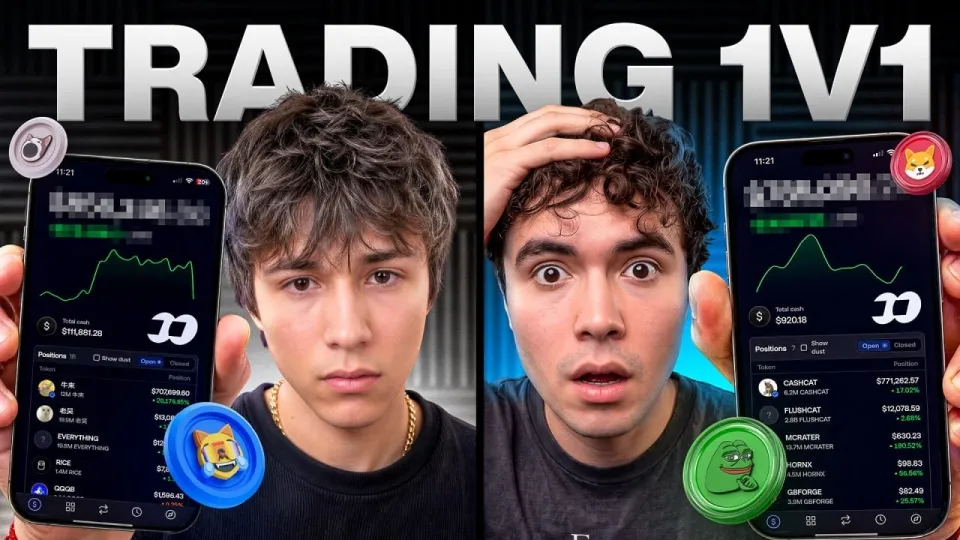
Video: I Challenged A Pro Memecoin Trader (Who Won?)
Want articles like this for your own video to promote it on YouTube and Google? Order them through the Telegram bot @sat_sit_bot. Articles with your video embedded are written and posted by the bot itself — on popular topical sites (no ads). Try it free: 50 articles on us.
· based on the channel insentos
Meme coin trading is the practice of buying and selling highly speculative tokens — usually launched on Solana or Ethereum with no revenue, no product and no fundamentals — by reading liquidity, holder behaviour and momentum rather than valuation. Done properly it is a risk-management discipline with a fast feedback loop, not a lottery ticket; the traders who last size small, cut fast and treat every position as expendable. The challenge format popularised by the insentos channel, where a host faces an experienced memecoin trader live on stream, is a useful window into that discipline — and you can follow the same community link the video promotes, the fomo.family registration and bonus page, to watch how these sessions are structured.
What the insentos pro-trader challenge actually demonstrates
The video's core lesson is that live meme coin trading is mostly decision-making under uncertainty, and the commentary matters more than the profit and loss. In the format, the host and a guest trader (referred to as Grand in the stream's later segment) trade in real time while explaining entries, exits and the reasoning behind each click, which turns a gambling-adjacent activity into something a beginner can actually study.
Three things stand out from the way such sessions are run and from how viewers reacted:
- The guest keeps narrating the thought process even mid-trade, asking the host what he is seeing — a habit that separates deliberate trading from reflexive clicking.
- Sessions frequently end in the red. Several viewers noted that these challenge videos almost always finish with a loss, which is itself the most honest data point about the asset class.
- Speed is the product. Meme coins on Solana can move tens of percent in minutes, so the workflow — chart, liquidity, holders, buy, exit — has to be muscle memory before real money is involved.
The pre-trade checklist for any meme coin
Before buying a meme coin, verify four things in order: contract safety, liquidity depth, holder concentration and the narrative's freshness. Skipping any of them is how beginners turn a 20% drawdown into a total loss.
- Contract and mint authority. On Solana, confirm the mint authority is revoked and freeze authority is disabled; on EVM chains, check for honeypot logic that blocks selling.
- Liquidity. A pool with a few thousand dollars of liquidity cannot absorb a real exit. Look at liquidity relative to your intended position: if your size is more than 1–2% of the pool, your own sell will move the price against you.
- Holder distribution. A single wallet holding 20%+ of supply can dump on you at any moment. Check the top holders and whether they are linked wallets funded from the same source.
- Age and volume. A token that is minutes old with no volume history is a coin flip; a token with a few hours of consistent volume and organic holder growth has at least proven it can attract buyers.
Execution tools and how a session is actually run
Execution speed and interface quality decide whether a scalper gets filled at the price they saw or 15% worse, which is why the video points to Axiom as the trading terminal. Axiom is a trading interface built for on-chain meme coins — it bundles charts, pair discovery, quick buy/sell buttons and wallet management into one screen so a trader can move from spotting a token to owning it in seconds.
The practical workflow in a live session looks like this:
- Scan new pairs and trending lists for tokens with rising volume and holder count.
- Open the chart, mark the level you would enter at, and decide your exit before you buy.
- Set the position size in advance — a fixed fraction of the bankroll, not a round number that feels exciting.
- Execute, then manage: take partial profit into strength, move the stop, and accept that being stopped out is a normal outcome.
The tools do not create edge; they remove friction. A slow trader with a good checklist beats a fast trader with none.
Position sizing and the maths of staying alive
Survival in meme coin trading is a position-sizing problem before it is a picking problem, because the distribution of outcomes is extremely skewed. If you risk 50% of your bankroll per trade, four consecutive losses — entirely normal in this niche — leave you with 6% of your capital, and recovery becomes mathematically implausible.
A workable framework for a beginner:
- Risk 1–3% of the bankroll per position, so a losing streak of ten trades costs at most a quarter of the account.
- Cap total exposure across correlated meme coins, since in a risk-off move everything dumps together.
- Take a defined profit target on part of the position — many traders scale out half at 2x and let the rest run with a stop at breakeven.
- Track every trade with entry, exit, thesis and outcome. After 50 trades the pattern in your own data is more valuable than any influencer's calls.
The viewer observation that challenge videos usually end in a loss is not a reason to avoid the game; it is a reminder that even skilled participants operate with a hit rate far below what social media implies.
The psychology problem nobody escapes
Meme coin trading is a psychology test disguised as a financial activity, and the biggest losses come from behaviour rather than token selection. The two failure modes are chasing a green candle after the move has already happened, and holding a loser because selling would make the loss real.
Practical countermeasures that show up in live sessions:
- Pre-commit to exits. Write the invalidation level down before entry; if price hits it, you sell, no debate.
- Do not trade to recover. A loss does not create an obligation to win it back in the next ten minutes.
- Stop after a set number of losses. Two or three losers in a row usually signals that the market regime does not match your style that day.
- Separate learning from earning. Watching a pro narrate trades is study; copying their entries minutes later is not.
Viewers of the challenge repeatedly asked for more beginner-oriented sessions precisely because seeing the reasoning — including the losing trades — is what builds judgement.
Common questions beginners raise about live challenges
Beginners watching a live trading challenge tend to raise the same doubts, and they are worth answering directly. The first is whether the format is real: on-stream trading with visible balances is more transparent than a screenshot, but it still reflects one session, and one session is not a track record.
The second is whether an audience can replicate the results. Influential accounts can move attention toward a token, which is an advantage ordinary traders do not have; treat any call from a large account as a liquidity event, not a signal. The third is access: community groups and courses are often gated, which viewers find frustrating, so prefer public, verifiable material and paper-trade first. The fourth is the expectation of consistency — no meme coin trader wins every day, and anyone presenting otherwise is selling something.
Useful links
- fomo.family registration and bonus via insentos — the community link promoted in the video.
- Axiom trading terminal — the on-chain trading interface used in the session.
- insentos on X
- insentos on Instagram
- insentos on TikTok
Final thoughts on trading meme coins responsibly
Meme coin trading rewards process over prediction: check the contract and liquidity, size positions so a losing streak cannot end you, and pre-commit to exits before emotion gets a vote. The insentos challenge is valuable precisely because it shows the messy version — live decisions, explanations in real time and sessions that do not always end green — rather than a highlight reel. Use it as a study aid, keep your first months small, and treat every trade as tuition rather than income. If you want to follow the same sessions and community the channel uses, start with the fomo.family link from the video and paper-trade alongside before risking real capital.
Key takeaways
- Meme coin trading is a short-horizon, high-variance game: position sizing matters more than picking the next 100x.
- The insentos challenge pitted a host against a guest pro trader live on stream, with advice and reasoning shared as trades were placed.
- Tools named in the video include Axiom (axiom.trade) for execution and fomo.family for the community/registration link.
- Most viewers' takeaway: even experienced traders end sessions down, so bankroll rules beat conviction.
- Liquidity, holder distribution and contract safety checks come before any entry on a Solana memecoin.
Source: I Challenged A Pro Memecoin Trader (Who Won?) · Markdown version
Questions & answers
Is meme coin trading actually profitable for beginners?
For most beginners it is not profitable at first, because the edge comes from process — contract checks, position sizing and disciplined exits — rather than from picking winners. Treat the first months as paid education with small size, and measure yourself over at least 50 trades instead of a single session.
Why do live trading challenge videos often end with a loss?
Because meme coins are extremely high-variance and even skilled traders have a hit rate well below what social media suggests. A single session is a small sample, and the honest ones show the drawdowns as well as the wins.
What tools do traders use to buy Solana meme coins quickly?
Most use a dedicated on-chain terminal that combines pair discovery, charts and one-click execution, such as Axiom, which is the platform referenced in the insentos video. Speed matters, but a pre-trade checklist for liquidity and holder concentration matters more.
How much of my bankroll should go into one meme coin?
A common rule is 1–3% of the bankroll per position, with a cap on total exposure because meme coins tend to crash together. That sizing keeps a normal losing streak survivable and leaves capital for the trades where your process actually works.